


-


Vendor: 5 Core
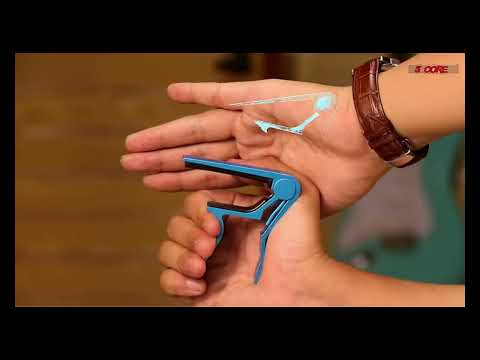
5Core Capo 4Pcs Acoustic Electric Guitar 6 String Kapo Clip For Banjo Mandolin Ukulele
SKU: CAPO BLUE 4PkAbout Item:【Quick & Easy to Use】 This guitar capo features a one-hand clamp and release system, making it easy to move between frets. Perfect capo for acoustic guitar 6 string or electric guitar, with no need...Sale price $9.99Regular price $18.00 -


Vendor: 5 Core
5Core Capo 4Pcs Acoustic Electric Guitar 6 String Kapo Clip For Banjo Mandolin Ukulele
SKU: CAPO GLD 4Pk【Quick & Easy to Use】 This guitar capo features a one-hand clamp and release system, making it easy to move between frets. Perfect capo for acoustic guitar 6 string or electric guitar, with no need to...Sale price $9.99Regular price $25.00 -


Vendor: 5 Core
5Core Capo 4Pcs Acoustic Electric Guitar 6 String Kapo Clip For Banjo Mandolin Ukulele
SKU: CAPO RED 4PkAbout Item ONE-HAND OPERATION - Quick clamp and release system lets you change frets instantly on any guitar. UNIVERSAL COMPATIBILITY - Works across acoustic guitars, electric guitars, ukuleles, banjos, mandolins. PRECISION PRESSURE CONTROL - Balanced spring...Sale price $9.56Regular price $18.00 -


Vendor: 5 Core
5 Core Guitar Capo Quick Change Acoustic Electric String Clip Banjo Mandolin Or Ukulele
SKU: CAPO AL SLV【Premium Guitar Capo 】Crafted from high-quality aluminum alloy, this guitar capo is lightweight yet highly durable, ensuring long-term performance for all playing styles. 【Buzz-Free Performance】Evenly distributes pressure across strings, eliminating buzzing and maintaining perfect tuning for...Sale price $7.12Regular price $14.00 -


Vendor: 5 Core
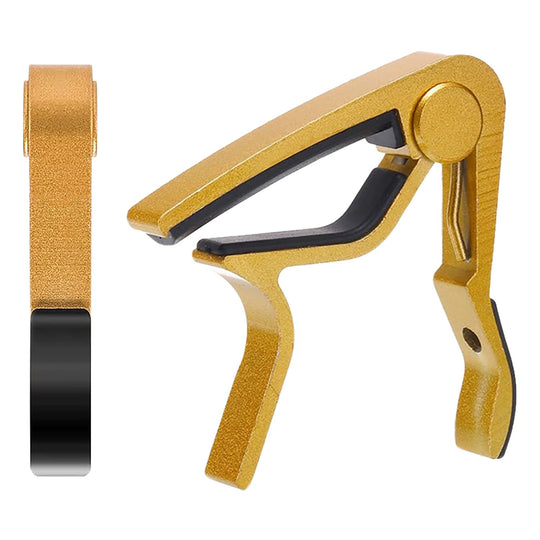
5Core Capo Acoustic Electric Guitar 6 String Kapo Clip For Banjo Mandolin Ukulele
SKU: CAPO GLDAbout Item: 【Quick & Easy to Use】 This guitar capo features a one-hand clamp and release system, making it easy to move between frets. Perfect capo for acoustic guitar 6 string or electric guitar, with no...Sale price $5.99Regular price $11.00 -


Vendor: 5 Core
5Core Capo Acoustic Electric Guitar 6 String Kapo Clip For Banjo Mandolin Ukulele
SKU: CAPO REDAbout Item: 【Quick & Easy to Use】 This guitar capo features a one-hand clamp and release system, making it easy to move between frets. Perfect capo for acoustic guitar 6 string or electric guitar, with no...Sale price $5.99Regular price $11.00


Why You Actually Deserve a Good Capo
Eevery serious guitarist deserves a quality guitar capo because cheap ones silently destroy your playing experience by causing intonation issues, string buzz, and fretboard damage. A poorly designed capo applies uneven pressure, pulling strings sharp or flat and forcing constant retuning during practice or performance.
The real costs extend beyond frustration: wasted hours adjusting mid-session, prematurely snapped strings from over-tension, and scratched necks from metal edges that dig into wood over time. Beginners lose momentum when chords buzz or sound off, while pros waste gig prep time fighting unreliable clamps.
Capos evolved from crude C-clamp monstrosities in the 20th century—bulky, slow to adjust, and intonation killers—to modern quick-release trigger and lever designs that clamp evenly in seconds. These innovations use padded rollers or silicone grips to preserve string life and neck finish while maintaining perfect pitch.
Even professional players carry two capos onstage: one primary for reliability and a backup to avoid mid-song disasters from slippage or failure. This redundancy underscores why skimping on a kapo undermines your technique and tone, making a premium model essential for consistent, buzz-free performance.
Source- Guitarsonmain
Types of Guitar Capos (Complete Breakdown + Comparison Table)
Guitar capos vary widely in design to suit different playing styles, guitars, and performance needs in 2025. Each type balances speed, precision, and compatibility.
Trigger / Spring / Quick-Release Capos
These use a spring-loaded lever or trigger for instant clamping and release, ideal for live performances requiring frequent changes. They apply firm, even pressure across all strings but offer limited tension adjustment.
Partial Capos
Partial capos clamp only select strings, enabling alternate tunings and unique voicings without retuning the entire guitar. Popular for creative players exploring open or modal sounds on specific frets.
Screw-Adjustable / Dial-Tension Capos
These feature a threaded screw or dial for precise tension control, ensuring perfect intonation on any fret. Slower to apply but deliver consistent results, especially for recording or critical setups.
Elastic / Stretch Capos
Elastic bands stretch over the neck with built-in pressure pads, providing ultra-fast application at low cost. They suit casual practice but risk uneven pressure and slippage on wider necks.
Clamp-Style for Classical Wide Necks
Heavy-duty clamps with wider jaws and adjustable arms fit classical or flamenco guitars' broad necks. They prioritize stability over speed for nylon-string instruments.
Drop-Tuned / "Cut Kapo" Alternatives
These modified capos omit the low E string (or others) for drop tunings like D standard, mimicking partial designs. They allow standard chord shapes in lower keys without full retuning.
Source - Guitardomination
Key Features to Look For When Buying a Capo (2025 Buyer’s Guide)
Tension Control (Why Adjustable Beats Fixed-Spring Every Time)
Adjustable tension via screws or dials allows precise clamping to match string gauge and fretboard radius, preventing sharp intonation or dead notes. Fixed-spring models apply uniform force that works on one guitar but pulls strings unevenly on others, causing buzz or retuning needs mid-session.
Rubber/Silicone Quality & Thickness (Prevents Buzz + Protects Finish)
High-grade silicone or thick rubber pads (2-4mm) conform to frets without slipping, eliminating buzz while shielding nitrocellulose finishes from dents. Thin or hard pads dig in, damaging necks over time; opt for TPE or medical-grade silicone for grip without residue.
Buzz-Free Geometry (Curved vs Flat Pads, Radius Matching)
Curved pads match acoustic fretboard radii (7.75-10 inches), ensuring even string pressure for open resonance. Flat kapo pads suit electrics but buzz on curved necks; adaptive designs auto-conform to prevent dead spots.
One-Handed Operation Reality Check
True one-handed capos use squeeze-release levers for instant swaps during gigs, but cheap springs stick or over-clamp. Test for smooth action without two-hand wrestling, essential for stage changes.
Weight & Balance (Affects Open-String Resonance)
Lightweight (under 60g) aluminum or carbon fiber preserves sustain and open-string ring; heavy zinc dulls tone by damping vibrations. Balanced designs sit flush without neck torque.
Storage Hook vs No Hook (For Mic Stand)
Integrated hooks let kapo clip to headstocks or mic stands, preventing floor drops during sets. Hookless models tumble easily; prioritize for performers.
Materials: Aluminum vs Zinc vs Plastic vs Carbon Fiber
Aircraft aluminum offers strength-to-weight ratio for durability without tone loss. Zinc provides affordability but adds heft; plastic suits budgets but flexes; carbon fiber excels in premium lightness and vibration transfer.
Source- Lucclementguitar
Safety First – How to Prevent Your Capo From Damaging Your Guitar
Quality kapo protect your guitar when used correctly; poor ones cause irreversible harm to finishes and intonation.
Finish-Checking Disease (Nitrocellulose Lacquer Guitars at Risk)
Nitrocellulose finishes on vintage acoustics crack under hard metal edges or thin pads, creating "finish-checking" that spreads like spiderwebs. Silicone pads (2-4mm thick) distribute pressure evenly, preventing dents on delicate lacquers common in 2025 premium guitars.
Correct Pressure Myths: More ≠ Better (Over-Clamping Sharpens Notes)
Excess tension lifts strings sharp by 10-20 cents, killing intonation; ideal pressure stops buzz without bending frets. Adjustable models let you dial minimal force—just enough for clean ring—unlike fixed springs that over-clamp.
How to Test a Capo for Neck Bend Before Buying
Clamp at fret 2, tune open strings, then check 12th-fret harmonics against fretted notes (should match within 5 cents). Strum hard; no buzz or dead notes means even pressure. Test the kapo on your guitar's radius to detect warping potential.
Why Cheap Spring Capos Can Pull Frets Over Time
Weak springs slip, causing repeated micro-adjustments that wear frets unevenly and dent wood. Constant tension imbalances the neck relief, leading to truss rod tweaks after months.
Temperature & Humidity Warnings (Elastic Capos Degrade)
Elastic bands harden below 0°C or stretch out above 40°C, losing grip and snapping unpredictably. Humidity above 70% causes rubber rot; store kapo in cases at 45-55% RH to avoid degradation.
How to Use & Setup Guide for Guitar Capos (Step-by-Step With Photos)
Exact Placement: Behind the Fret, Not On It
Place the capo just behind the fretwire, about 0.5 to 1 mm away, mimicking how your finger presses the strings. This placement ensures clean notes without buzzing or muffled sound. Avoid placing the capo directly on top of the fret or too far behind (over 3 mm), which causes intonation issues.
How Close to the Fret Matters (0.5 mm vs 3 mm = Huge Intonation Difference)
Being close to the fret (around 0.5 mm) minimizes string bending, which keeps your guitar in tune. Move it too far back (3 mm or more) and the strings stretch more, sharpening notes and creating tuning problems, impacting chord sound quality drastically.
Quick-Release Technique Without Buzzing
When using a quick-release or trigger kapo, squeeze the lever fully to open, place the capo just behind the fret, and release evenly for balanced pressure. Avoid half-clamping which leads to buzzing. Ensure even contact across all strings by lightly testing each string's sound after placement.
Using Partial Capos Creatively
Partial capos clamp only some strings—try placing one on the 2nd or 3rd string to simulate drop-D or alternative tunings without retuning your guitar. This technique expands chord voicing options and fingerpicking palettes for creative playing styles.
Capos on 12-String, Classical, or Electrics with Floating Bridges
For 12-string guitars, use sturdier kapo with firm pressure to press doubled strings cleanly. Classical guitars require wide-neck clamp capos designed to fit nylon strings gently without crushing them. Floating bridge electrics need lighter action capos to avoid bridge movement and tuning instability.
Transposing Cheat Sheet (Capo 2 = Key of D, etc.)
Placing a capo changes your key up by semitones equal to the fret number:
-
Capo 1 = Key up 1 semitone (C to C#)
-
Capo 2 = Key up 2 semitones (C to D)
-
Capo 3 = Key up 3 semitones (C to D#)
This allows playing familiar chord shapes while changing the pitch to match vocal range or song key easily.
Source- Pickupmusic
Maintenance & Long-Term Care of Your Capo
Cleaning Sticky Rubber Pads
Regularly clean rubber or silicone pads with a soft cloth dampened slightly with water or mild soap. Avoid harsh chemicals that degrade the material. Removing dirt and oils prevents slippage and maintains grip.
Lubricating Screw Threads
For screw-adjustable capos, apply a small amount of guitar-safe lubricant or light machine oil to the screw threads to keep tension adjustment smooth and prevent rust. Wipe excess oil to avoid contamination on the guitar neck.
Spring Fatigue Signs & Replacement
If the capo’s spring loses tension, causing slippage or uneven pressure, it may need replacement. Signs include difficulty maintaining clamp force or inconsistent grip. Some brands offer replaceable springs as parts.
When to Replace Silicone Pads (Every 2–3 Years)
Silicone pads wear down and compress over time, losing elasticity and causing buzzing or poor grip. Replace pads every 2 to 3 years or sooner if you notice fading performance.
Storing Capos So They Don’t Lose Tension
Store capos off the guitar neck in a case or pouch. Avoid keeping them clamped during long periods to prevent spring fatigue. Hanging capos on hooks or dedicated stands maintains shape and prolongs lifespan.
Proper maintenance keeps your capo functioning smoothly and your guitar sounding its best over the long term.
Source- Martinguitar
Capo Myths Busted
"All Capos Sound the Same"
Capos differ significantly in tone due to pad material, tension, and geometry—cheap ones muffle highs or deaden sustain, while quality adjustable models preserve open-string resonance and brightness. Blind tests show premium capos ring clearer without damping vibrations.
"Trigger Capos Always Detune"
Modern trigger capos with proper placement (0.5mm behind fret) and even pressure hold tuning stable; detuning happens from over-clamping or poor design, not the mechanism itself. Adjustable triggers excel in intonation over fixed springs.
"Elastic Capos Are Fine for Beginners"
Elastic capos slip under heavy strumming, causing buzz and constant retuning that frustrates new players learning chord transitions. They degrade quickly, teaching poor habits instead of reliable setup.
"You Only Need One Capo Forever"
A single capo fails across guitars—acoustics need curved pads, electrics flat ones, classicals wide clamps. Pros carry multiples for quick swaps and backups against spring fatigue or loss.
These myths persist from outdated designs, but 2025 capos prove precision matters for tone, stability, and playability.
Source- Sweelee
Frequently Asked Questions (Schema-Ready)
Question: What is a guitar capo and what does it do?
Answer: A capo clamps all strings at a chosen fret, shortening the scale length and raising pitch so you play familiar chord shapes in higher keys.
Question: How do you place a kapo correctly on the fretboard?
Answer: Position it 0.5-1 mm behind the fret wire, not on top, ensuring even pressure across strings for buzz-free intonation.
Question: Does a capo change the key of my guitar?
Answer: Yes, each fret raises the key by one semitone—capo on fret 2 turns C shapes into D chords.
Question: Will a capo damage my guitar neck or finish?
Answer: Quality capos with thick silicone pads won't; cheap ones dent nitro finishes or bend frets from uneven pressure.
Question: Are all capos the same in sound quality?
Answer: No, premium adjustable capos preserve tone and sustain better than cheap springs that muffle highs.
Question: What's the best type of kapo for beginners?
Answer: Trigger or quick-release for easy one-handed use; avoid elastic ones that slip during learning.
Question: How do I transpose songs using a capo?
Answer: Use a capo chart: capo 2 lets G shapes sound like A; match to singer's vocal range easily.
Question: Can capos be used on electric guitars?
Answer: Yes, but choose flat-pad models to avoid buzzing on flatter fretboards or floating bridges.
Question: Why does my capo cause buzzing or detuning?
Answer: Uneven pressure or wrong placement (too far from fret); test with harmonics matching fretted notes.
Question: Do I need different capos for acoustic vs electric?
Answer: Acoustics need curved pads for radius match; electrics prefer flat for low action.
Question: How often should I replace a capo's pads?
Answer: Every 2-3 years or when grip weakens, to prevent buzz and neck marks.
Question: Can partial kapo create drop tunings?
Answer: Yes, clamp high strings only for instant drop-D or open voicings without retuning.
Question: Is it okay to leave a capo on overnight?
Answer: No, prolonged tension warps neck relief; remove after use.
Question: What's the difference between trigger and screw capos?
Answer: Triggers are fast for gigs; screws offer precise tension for studio accuracy.
Question: Do expensive capos really sound better?
Answer: Yes, better materials reduce damping for brighter, more open tone vs budget models.
Conclusion
A quality guitar capo transforms chord shapes into new keys effortlessly, preserves perfect intonation, and unlocks creative tunings without compromising tone or damaging your instrument. From trigger quick-releases for stage swaps to adjustable screws for studio precision, selecting the right type with even pressure, thick silicone pads, and buzz-free geometry ensures reliable performance across acoustics, electrics, and classicals.
Proper placement just behind the fret (0.5mm gap), regular pad cleaning, and avoiding over-clamping prevent finish dents, fret wear, and detuning that plague cheap models. Maintenance like lubricating threads and replacing worn springs every 2-3 years keeps your capo gripping securely for years of hassle-free use.
Busting myths reveals premium kapo deliver brighter sustain and stability that budget springs can't match, making multiples essential for pros tackling diverse guitars and sessions. Invest in features matching your style—lightweight for resonance, hooks for gig bags—and elevate every practice to professional results.
Alex Even
Hi, I’m Alex Even. I’ve been working in the pro audio industry for over 15 years, specializing in everything from studio recording setups to live sound systems. Whether it’s fine-tuning a PA DJ system, choosing the right microphone, drum stool, keyboard bench or setting up a home studio, karaoke setup, I’ve spent years helping musicians, audio engineers, and content creators get the sound they’re looking for. I’m passionate about making audio technology easy to understand and even easier to use—because great sound should be accessible to everyone.
