


-

Vendor: 5 Core
5 Core Megaphone 30W Bull Horn PA Speaker w 800 Yards Range Loud Siren Voice Amp
SKU: 8R REDSale price: $19.99
Regular price: $25.00 -
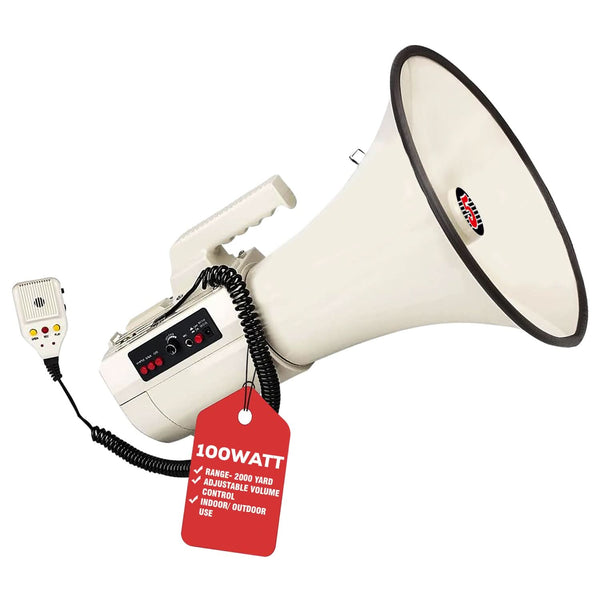
Vendor: 5 Core
5 Core Megaphone 100W Bull Horn Professional PA Speaker w 2000 Yards Range Loud Siren Voice Amp
SKU: 4501 USBSale price: $140.79
Regular price: $320.00 -
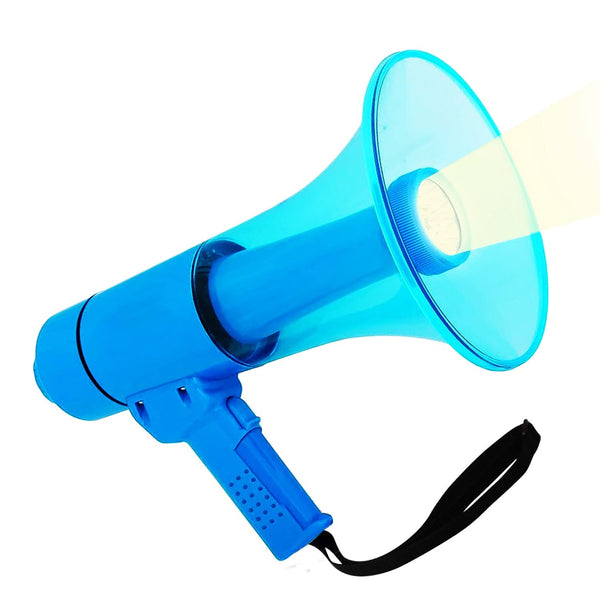
Vendor: 5 Core
5 Core Megaphone 50W Waterproof Bull Horn PA Speaker w 800Yard Range Flashlight Loud Siren Voice Amp
SKU: HW 18 WPSale price: $53.19
Regular price: $96.00 -
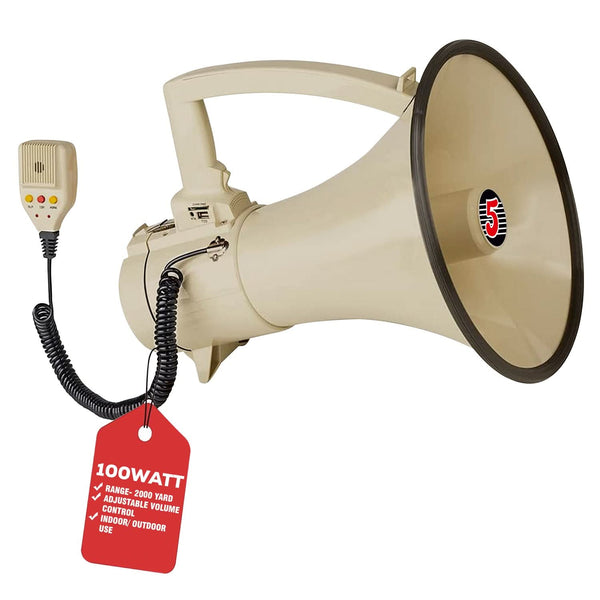
Vendor: 5 Core
5 Core Megaphone 100W Bull Horn Professional PA Speaker w 2000 Yards Range Loud Siren Voice Amp
SKU: 3501 USBSale price: $105.29
Regular price: $226.00

Introduction – Do You Really Need a Professional Megaphone?
Consumer toy megaphones, often under 10 watts with plastic builds, distort at high volumes, reach only 50-100 meters in quiet settings, and fail quickly in wind or crowds—leaving coaches yelling hoarse during games, lifeguards unheard over waves, or event directors drowned out by chatter. Professional-grade loud speaker models, typically 20-50 watts or more, deliver 110-120+ dB SPL for clear projection up to 1-2 km, piercing noise in protests, search & rescue operations, or film sets where every command counts. rugged loud speaker units feature metal horns, weatherproofing, and sirens for durability in rain-soaked rallies or dusty coaching fields, outlasting toys that crack after drops. Battery life extends hours versus minutes, with anti-feedback tech ensuring intelligible speech without squeals during emergencies. Upgrading prevents critical failures where volume, range, and reliability directly impact safety and effectiveness.
Source- Wikipedia
Understanding the Terminology: Megaphone vs Bullhorn vs Loudspeaker vs Loud Hailer
Megaphone and loud hailer (or loudhailer) originated as simple, unpowered acoustic horns—cone-shaped devices that amplify voice through physics alone, dating back thousands of years for directing sound without electricity. Bullhorn emerged as an American term for powered versions with built-in microphones and amplifiers, while loud hailer favors British English for similar handheld units.
Modern megaphone or bullhorn typically feature detachable or built-in mics, batteries, and horns for 100-2000m range, distinguishing them from unpowered speaking trumpets that rely solely on shape for modest gain. Loudspeakers refer broadly to any amplified speaker system, often larger PA setups for music or announcements, not handheld like megaphones.
Regional naming overlaps—"bullhorn" stresses pistol-grip electronics in the US, "loud hailer" evokes maritime use in the UK—but all describe portable voice projection tools, with "megaphone" as the universal baseline. Choose based on power needs: acoustic for portability, electric for volume piercing crowds.
Source- Umaudio
Types of Professional Megaphones Available Today
Shoulder-slung traditional bullhorns loud speaker (10–50W) strap on for hands-free use by coaches or event staff, projecting 300-800m with built-in mics and sirens for sports fields or parades, offering stability over handheld during movement.
Handheld pistol-grip megaphones provide ergonomic one-handed operation in 20-65W models, ideal for quick crowd control or directing with ranges up to 1200m, often featuring volume dials and lightweight ABS builds.
Detachable-mic megaphones suit press conferences or speeches, allowing flexible positioning with 40-65W power for clear articulation up to 1km, including anti-feedback tech and recording functions.
Waterproof/marine megaphones withstand rain, waves, or splashes for lifeguards and boats, typically 30-50W with IPX-rated seals and corrosion-resistant horns projecting 500-1000m over water noise.
Fire-rated/explosion-proof Megaphone loud speaker models meet safety standards for industrial sites or hazmat zones, using spark-proof internals and rugged metal in 20-40W configs for reliable alerts in volatile environments.
Professional Megaphone with siren, whistle, USB/MP3, recording & playback add alerts and media playback in 40-65W units, perfect for emergencies or events with pre-recorded messages reaching 800-1200m.
Ultra-long-range models (50-100W+) achieve 1–2 km projection for search & rescue or large rallies, with polyimide diaphragms for clarity and heavy-duty batteries enduring hours in extreme conditions.
Source- Umaudio
Key Features to Look for in a Professional Grade Loud Speaker
Wattage vs Real-World Range: 20-50W models realistically project 300-1000m in open air, while 50W+ reaches 1-2km; "2000 yards" claims often test in ideal lab conditions—factor wind, crowds, and obstacles reducing effective range by 30-50%.
Sound Pressure Level (dB at 1 meter): Seek 110-125dB for crowd-piercing clarity; higher SPL (e.g., 120dB on 20-50W units) ensures intelligibility over noise without distortion.
Battery Type and Real Runtime: Lithium-ion (1500-2400mAh) offers 4-16+ hours vs alkaline's 2-8 hours or NiMH's shorter cycles—prioritize rechargeables with low-battery alerts for uninterrupted use.
ABS vs Fiberglass Body: Lightweight ABS loud speaker (under 2kg) suits portability but dents easier; fiberglass adds durability for rough handling at 2-4kg, balancing weight vs impact resistance.
Built-in Siren, Whistle, Talk, and Recording: Essential for alerts—sirens hit 120dB, recording stores 10-60s messages, with USB/SD playback for pre-loaded announcements on modern 30-65W units.
Shoulder Strap vs Pistol Grip Ergonomics: Pistol grips on Megaphone enable one-handed control for dynamic use; straps free hands for marching or coaching, with padded designs reducing fatigue over hours.
Weather Resistance Ratings: IP65+ loud speaker for rain/splash-proofing in marine or outdoor events; IP67 submerges briefly, vital for lifeguards or rallies.
Microphone Quality and Anti-Feedback: Dynamic mics handle loud environments better than condensers; feedback cancellation via DSP ensures clear speech up to 1km without squeals.
Warranty Length: 1-year basic coverage; 3-5 years signals pro build quality, covering batteries and drivers for long-term reliability
Source- AudioLink
Safety First – Common Megaphone Failures and How to Prevent Them
Voice Coil Burnout (Over-Driving): Prolonged max volume overheats megaphone drivers; prevent by limiting use to 80-90% output, taking 5-minute cool-downs during long events, and choosing units with thermal protection.
Battery Leakage Damage: Alkaline batteries corrode internals if left installed; opt for lithium or NiMH rechargeables, remove during storage, and store at 50-70% charge in cool, dry places.
Microphone Feedback and Howling: Sound loops from mic facing horn or reflections; position mic away from horn, use directional dynamics, enable anti-feedback DSP, and avoid hard surfaces—keep 30-50cm mouth distance.
Dropping and Cracking ABS Housing: Plastic casings on Professional Megaphone shatter on concrete; select fiberglass-reinforced models, use protective cases for transport, and add rubber bumpers—test drop ratings where available.
Water Damage Myths and Realities: IP65+ ratings handle splashes/rain but not submersion; myths claim all are waterproof—reality demands seals checked yearly, drying internals post-exposure, avoiding prolonged marine use without IP67.
Hearing Safety (OSHA/NIOSH Limits): 110dB SPL limits exposure to 2 hours/day; 120dB to 15 minutes; stand 1-2m back when testing, use earplugs above 100dB prolonged, and follow dual-hearing protection for operators over 115dB.
Source- Audiotoolkit
Step-by-Step Guide: How to Properly Use a Professional Megaphone
1. Power On and Check Settings: Insert charged batteries or connect power, slide the mode toggle to "voice" (middle position) to avoid accidental sirens, and adjust volume to 50-70% initially—test in open air away from people.
2. Correct Mouth-to-Mic Distance: Position mouth 2–4 inches (5-10cm) from the mic grille for optimal capture without distortion; speak loudly and clearly into it rather than whispering, enunciating slowly for maximum clarity over distance.
3. Speaking Technique for Maximum Clarity: Use a firm, projected voice at normal-to-raised volume—avoid shouting which clips sound; pause between phrases, face the audience squarely, and sweep the horn slowly across crowds rather than pointing directly at faces. Hold steady with both hands or strap for stability, projecting from the diaphragm for sustained power.
4. Trigger Siren/Whistle Safely: Switch toggle to "siren" mode first, warn listeners ("Siren coming!"), then press and hold the trigger briefly (1-3 seconds) at low volume to alert without startling—return to voice mode immediately after.
5. Using Recording & Playback Features: Press record button (often labeled REC), speak 10-60s message clearly at 2-4 inches, stop recording, then select playback via dedicated button or toggle—loop as needed for repetitive announcements like drills.
6. Pairing External Mics or Music Sources: For Megaphone loud speaker models with AUX/Bluetooth/3.5mm jacks, connect dynamic mics or devices securely, select input mode, match levels to avoid feedback (mic away from horn), and test volume—use for speeches or background audio up to 1km range. Turn off when idle to save battery.
Source- Megaphoneplus
Real-World User Scenarios – Which Megaphone Fits Your Exact Need
Sports Coach / PE Teacher: 20-30W for 300-600m range over fields; must-have pistol grip, shoulder strap, siren for timeouts, and 8+ hour battery to cover practices without recharging.
Protest Organizer / Activist: 30-50W projecting 800-1200m through crowds; prioritize anti-feedback mic, recording for chants, weatherproof IP65 rating, and lightweight ABS under 2kg for mobility.
Search & Rescue / Wilderness Guide: 50W+ ultra-long-range (1-2km) with 120+dB SPL; essential siren/whistle alerts, rugged fiberglass body, 12+ hour lithium battery, and handheld strap for terrain navigation.
Lifeguard / Beach Patrol: 25-40W marine-grade waterproof (IP67); corrosion-resistant Megaphone dynamic mic for wind/waves, whistle function, and buoyant design reaching 500-1000m over surf noise.
Event Director / Festival Staff: 40-65W for 1km+ in noisy venues; detachable mic, USB/MP3 playback for announcements, anti-feedback DSP, and pistol grip with volume control for precise crowd direction.
Film/Production Sound Department: 20-40W with recording/playback and external mic/AUX inputs; low-distortion driver, adjustable SPL (110-120dB), compact pistol grip, and shoulder strap for set mobility without feedback.
Security / Crowd Control: 30-50W piercing 800m urban noise; built-in siren, talk switch, durable drop-proof housing, and quick-battery swap for 24/7 shifts with clear commands.
Marching Band Director: 25-40W shoulder-slung with 500-1000m range; hands-free strap, whistle/siren for cues, weather-resistant build, and long runtime to direct formations without pausing.
Source- Electromarket
Frequently Asked Questions (FAQs) – Everything You Still Wonder About Bullhorns
Question: What is the real range of a 30W megaphone?
Answer: Expect 500-800m in open air under ideal conditions; crowds, wind, or obstacles cut it to 300-500m realistically.
Question: Can police use any bullhorn or are there specific models?
Answer: Law enforcement prefers rugged 40-65W models with sirens, IP67 weatherproofing, and MIL-STD drop ratings for reliability in chaos.
Question: Are megaphones legal to use in public? Answer: Generally yes for non-disruptive announcements, but noise ordinances limit volume/time in residential areas—check local decibel regs (often 85-110dB max).
Question: How loud is too loud for hearing safety? Answer: Above 115dB exceeds OSHA 15-minute limit; use ear protection over 100dB prolonged megaphone loud speaker use, standing 2m back during tests.
Question: Will a Megaphone bullhorn work in heavy wind or rain?
Answer: IP65+ models handle moderate rain/wind; IP67 excels in storms but avoid direct submersion or gale-force gusts reducing range 20-50%
Question: Difference between watts and actual usable distance?
Answer: Watts power amplification (20W=300m, 50W=1km), but SPL, horn design, and environment determine real distance—lab claims halve outdoors
Question: Can I connect my phone to play music or pre-recorded messages?Answer: Yes, via AUX/Bluetooth/USB on modern units; select input mode, match levels to prevent feedback, ideal for alerts or BGM up to 1km
Question: Do megaphones damage hearing if used too close?
Answer: Yes, 120dB at 1m risks instant damage; maintain 1-2m operator distance and warn bystanders.
Question: How long do megaphone batteries last in real use?
Answer: Lithium: 4-16 hours at 70% volume; alkaline: 2-8 hours—factors like siren use drain 20-50% faster.
Question: What's the difference between ABS and metal megaphones?
Answer: ABS is lightweight/portable but dents; metal/fiberglass endures drops/weather better at higher weight.
Question: Can megaphones run on rechargeable batteries?
Answer: Most do with NiMH/lithium packs; avoid mixing types, charge fully pre-use for peak performance.
Question: Do all megaphones have sirens?
Answer: No, basic models lack them; pro units include 120dB sirens/whistles for emergencies
Question: How do I stop megaphone feedback?
Answer: Point mic away from horn, use anti-feedback DSP, speak 2-4 inches away, avoid reflective walls.
Question: Are bullhorns effective over large crowds?
Answer: 40W+ pierces 1000+ people; anti-feedback and recording ensure clarity in chaos
Question: What's the warranty on professional megaphones?
Answer: 1-3 years typical; premium models offer 5 years covering drivers/batteries.
Question: Do megaphones work indoors?
Answer: Yes for stadiums/halls, but feedback risks high—use low volume, directional mics.
Question: Can I use a megaphone for music playback?
Answer: Limited; AUX models handle simple tracks, but not hi-fi—prioritize voice clarity.
Question: How heavy are pro megaphones?
Answer: Handhelds: 1-3kg; shoulder models: 3-5kg with batteries.
Question: Do bullhorn need grounding?
Answer: No, battery-powered; avoid wet hands on power adapters.
Question: What's the max runtime on a full charge?
Answer: 12-24 hours voice mode; sirens cut to 4-8 hours on lithium packs.
Question: Are there wireless megaphones?
Answer: Yes, Bluetooth/AUX for external mics; range 10-30m before dropouts.
Question: How to test megaphone range safely?
Answer: Open field, 100m increments, ear protection on, no bystanders.
Conclusion
Professional megaphone bullhorn transform unreliable shouting into precise, crowd-piercing communication across coaching fields, emergency responses, or festivals, with 20-50W models delivering 300-1200m ranges when matched to wattage, SPL, and weatherproofing needs. Key choices like lithium batteries for 10+ hour runtime, anti-feedback mics, and sirens ensure reliability without failures like coil burnout or feedback loops.
Prioritize your scenario—lightweight pistol grips for sports, rugged IP67 for marine use, or recording-enabled for events—to avoid underpowered toys that distort or fail. Proper maintenance, from weekly cleaning to firmware updates, extends life to a decade, protecting investments in durable fiberglass builds.
Ultimately, the right megaphone safeguards voices, enhances safety, and commands attention effectively—select based on real-world range tests, ergonomics, and 3+ year warranties for lasting performance.
Alex Even
Hi, I’m Alex Even. I’ve been working in the pro audio industry for over 15 years, specializing in everything from studio recording setups to live sound systems. Whether it’s fine-tuning a PA DJ system, choosing the right microphone, drum stool, keyboard bench or setting up a home studio, karaoke setup, I’ve spent years helping musicians, audio engineers, and content creators get the sound they’re looking for. I’m passionate about making audio technology easy to understand and even easier to use—because great sound should be accessible to everyone.
